Reading time: ~8 minutes · Last updated: 2026
If you have ever seen an ad promising “$10,000 a month with dropshipping and zero effort,” you already know why this guide exists. Dropshipping is a real, legitimate business model — but most of what gets sold to beginners online is exaggerated.
This guide explains what dropshipping actually is, how the money really works in 2026, what it costs, and the honest steps to start. No fake screenshots, no “secret method.” Just a clear, realistic picture so you can decide if it is right for you.
What Is Dropshipping?
Dropshipping is a retail model where you sell products in your online store without keeping any stock. When a customer buys something from you, you forward that order to a third-party supplier, and the supplier ships the product directly to the customer.
You never touch the inventory. Your job is to choose products, build the store, market it, set the price, and handle customer support. Your profit is the gap between what the customer pays you and what you pay the supplier — minus all your other costs.
That last part is where most beginners get surprised, so let us talk about the money first.
How Much Money Does Dropshipping Actually Make?
This is the most important section, so read it slowly.
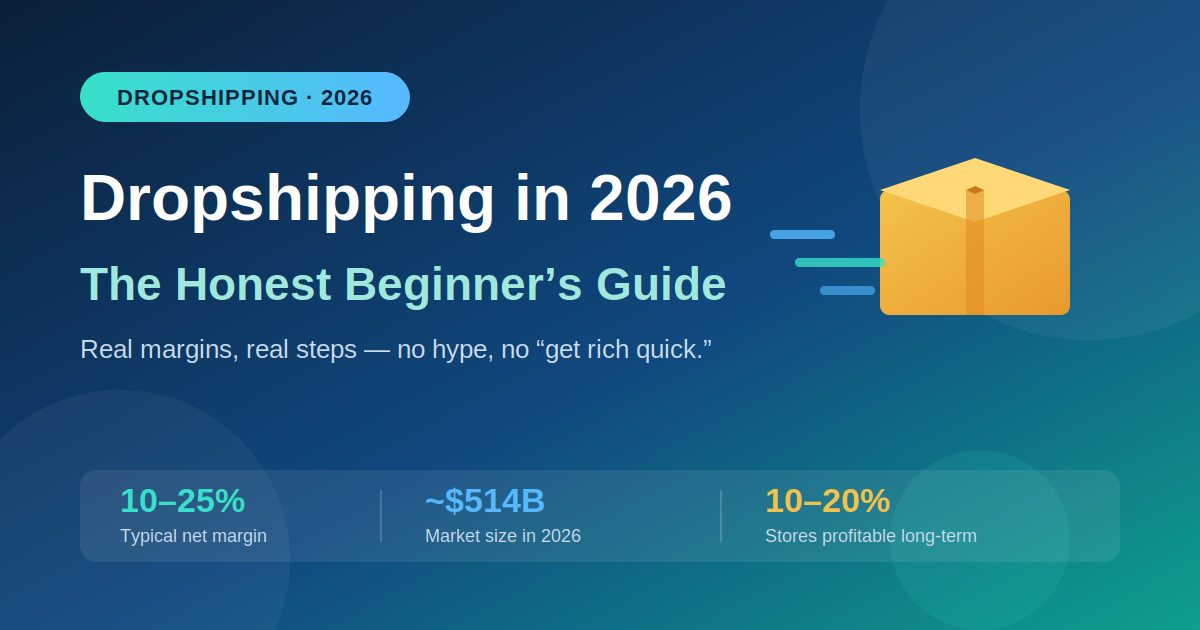
The global dropshipping market is large and still growing — estimated at roughly $418 billion in 2025 and projected near $514 billion in 2026. Almost a quarter of all online retail sales are now fulfilled through dropshipping. So the opportunity is real.
But the market being big does not mean it is easy. Here are the honest numbers from 2025–2026 industry data:
- Net profit margins usually land between 10% and 25% after you subtract product cost, shipping, ads, platform fees, and refunds.
- Only about 10% to 20% of stores stay profitable long-term. The rest quit, usually in the first year.
- On average, every $10,000 in sales turns into roughly $1,500–$2,000 of actual profit for a well-run store.
The biggest gap beginners miss is the difference between gross profit and net profit. A product might have a 40% gross margin and still leave you with only 10% after ads and refunds. Here is roughly where the money goes on a typical store:
| Expense | Share of revenue (rough) |
|---|---|
| Product cost | 30%–50% |
| Advertising (when scaling) | 20%–40% |
| Platform & payment fees | 2%–3% |
| Apps & tools | a small fixed monthly cost |
| Refunds & chargebacks | 2%–5% |
The lesson is simple: dropshipping is a thin-margin volume business. Small profit per order means you need many orders, and that usually means spending on ads. Anyone telling you it is passive, free, or guaranteed is not being honest with you.
Is Dropshipping Still Worth It in 2026?
Short answer: yes, but only if you treat it like a real business, not a shortcut.
The reason most people fail in 2026 is not that “dropshipping is dead.” It is that the bar is higher than it used to be. Ad costs have risen, competition is heavy, and customers now expect fast shipping and a professional experience. The days of throwing up a sloppy store and printing money are over.
Who tends to succeed today? People who already have, or are willing to build, skills in marketing, writing product descriptions, basic design, and customer service. If you can communicate well and you enjoy testing and improving things, you have a genuine edge.
How to Start Dropshipping in 2026 (Step by Step)
Here is the realistic process. None of these steps are skippable.
1. Pick a niche, not “everything”
General stores rarely win anymore. Choose a focused category you understand or care about — pet supplies, home and kitchen, fitness, hobby gear, or a specific health and wellness need. A focused store is easier to brand, easier to advertise, and easier for customers to trust.
Avoid the most saturated niches (generic fashion, phone gadgets everyone sells) unless you have a real angle or a strong brand idea.
2. Research products that can actually be profitable
A good dropshipping product usually has:
- A retail price between roughly $25 and $75 (high enough to cover ad costs, low enough for impulse value).
- A product cost under about 30% of the retail price.
- Light weight, to keep shipping cheap and damage low.
- Proven demand — high order volume and good reviews on supplier platforms.
- Something not easily bought at the local store.
Consumable or repeat-purchase products (filters, refills, supplies) are attractive because one customer can buy again and again, which lowers your reliance on constant paid ads.
3. Find reliable suppliers — and order samples
Your supplier directly controls your customer’s experience, so this step matters more than any other. Common platforms in 2026 include AliExpress (great for testing), CJdropshipping and Zendrop (often faster shipping and better integration), Spocket (US/EU suppliers for faster delivery), and Alibaba (for bulk or private label once you scale).
A smart, common 2026 approach is a hybrid: test new products on AliExpress, then move your winners to faster, more reliable suppliers.
Before you sell anything:
- Message the supplier with questions and see how fast and professionally they reply.
- Order a sample yourself. Check the real product quality, packaging, and actual shipping time. This single habit prevents the most painful beginner mistakes.
4. Build your store
Most beginners use a platform like Shopify, WooCommerce, or a similar store builder. Keep it clean and trustworthy: clear product photos, honest descriptions, visible shipping times, a refund policy, and easy contact options. Trust now decides conversions — surveys show top dropshippers credit branding and customer experience as major success factors.
5. Market it (and expect to spend)
This is where the real work and the real cost live. Over 85% of dropshippers rely on paid ads or influencers. You will likely test multiple ad creatives, lose some money learning, and slowly find what works. Budget for testing, track your numbers carefully, and do not scale a campaign until it is genuinely profitable after all costs.
6. Manage it like a real business
Handle customer emails quickly, set honest delivery expectations (long shipping times are the number-one customer complaint), and review your profit and loss regularly. The most successful operators in 2026 make decisions from a clear profit statement, not just an ad dashboard.
Common Mistakes That Sink Beginners
- Confusing revenue with profit. Big sales numbers mean nothing if ads ate them.
- Skipping samples. You cannot vouch for a product you have never held.
- Chasing the same “viral” product everyone is selling, which crushes the price and the margin.
- Ignoring shipping times, which leads to refunds and bad reviews.
- Expecting passive income. It is an active business that needs daily attention.
So, Should You Try It?
Dropshipping in 2026 is a viable, legitimate way to start an online retail business with low upfront cost and low inventory risk. The market is huge and still growing.
But it is not easy money, and it is not passive. It rewards patience, honest math, marketing effort, and good customer service. If you go in expecting to learn, test, and treat it like a real business, you have a fair shot. If you go in chasing the “get rich quick” promise from the ads, you will most likely lose money — like the majority who quit in year one.
Start small. Pick one niche. Order a sample. Build a clean store. Learn your numbers. That boring, steady approach is exactly what separates the profitable minority from everyone else.
Disclaimer: This article is for general educational purposes and is based on publicly available 2025–2026 industry data. It is not financial advice and contains no guaranteed-earnings promises. Your actual results depend on your niche, effort, marketing skill, and consistency. Always do your own research before investing money in any business.
