Ask any dropshipper why their store failed, and the answer is usually the same: the product. Not the theme, not the logo, not even the ads. A good product makes everything else easier; a bad one makes everything else pointless. This guide shows you how to find winning dropshipping products in India, step by step.
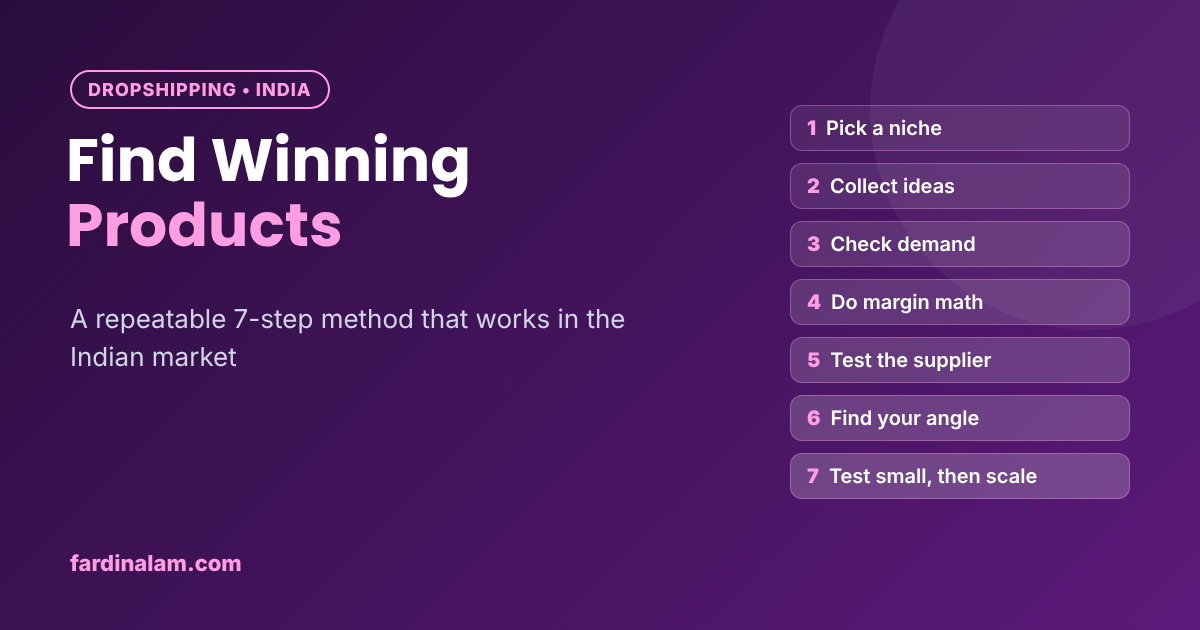
There’s no secret list of “winning products” that works for everyone — and anyone selling one is selling yesterday’s winners. What works is a repeatable method. Here’s a simple 7-step process built for the Indian market.
What makes winning dropshipping products in India?
Before you search, know what you’re looking for. A strong dropshipping product in India usually has most of these:
- Solves a clear problem or creates a “wow” moment that’s easy to show in a 10-second video.
- Isn’t easily available in every local shop or at a much lower price on big marketplaces.
- Sells for roughly ₹499–₹1,999. Cheap enough for an impulse buy, but with room for profit after ads and shipping.
- Has a healthy margin — ideally your selling price is at least 2.5–3 times your product + shipping cost.
- Is light, small and hard to break — cheaper shipping and fewer damaged deliveries.
- Has no size or fit issues — fewer returns than clothing or footwear.
- Is safe and legal to sell — no medicines, supplements with health claims, branded copies or restricted items.
Step 1: Start with a niche you understand
Pick an area you know or care about — home and kitchen, pets, fitness, car accessories, baby care, organisation, gadgets. When you understand the customer, it’s easier to spot good products and write ads that speak to them.
Step 2: Find ideas where people already buy
Look for products that are already selling, so you aren’t guessing: Most winning dropshipping products start as ideas you can spot here.
- Instagram Reels and YouTube Shorts: search phrases like “Amazon finds”, “kitchen gadgets”, “useful products” and see which videos have unusually high views and comments asking “where to buy?”.
- Meta Ad Library: search keywords like “COD available” or a product type, filter for India, and look for ads that have been running for weeks — advertisers don’t keep paying for ads that don’t sell.
- Marketplaces: check best-seller and “movers and shakers” lists on Amazon India and trending sections on Meesho and Flipkart.
- Google Trends: check whether interest in the product is rising, steady or falling in India.
Write every idea in a spreadsheet. Aim for 20–30 ideas before you judge any of them.
Step 3: Check demand properly
For each idea, ask:
- Is interest growing or at least stable on Google Trends?
- Are several different sellers advertising it (proof of demand), but not hundreds (too much competition)?
- Do comments show real buying intent — “price?”, “COD?”, “link?”
- Is it seasonal? Seasonal products (rakhi, Diwali decor, winter items) can work, but only if you launch early.
Drop any idea that fails two or more of these checks.
Step 4: Do the margin math
This is where most beginners go wrong. Calculate for each product: For example, winning dropshipping products almost always leave room for ads and returns in this math.
| Item | Example |
|---|---|
| Selling price | ₹999 |
| Product cost from supplier | ₹250 |
| Shipping + packaging | ₹80 |
| Payment gateway / COD charges | ₹30 |
| Estimated ad cost per order | ₹300 |
| Allowance for returns/RTO | ₹90 |
| Profit per order | ≈ ₹249 |
If the profit per order is tiny — or negative — after realistic ad and RTO costs, skip the product, however viral it looks.
Step 5: Check the supplier and quality
- Find at least two suppliers (Indian dropshipping suppliers or wholesalers) so one stock-out doesn’t kill your store.
- Compare delivery times — customers in India expect delivery within about a week.
- Order a sample yourself. Check quality, packaging and delivery speed. If you wouldn’t be happy receiving it, your customers won’t be either.
Step 6: Check competition and your angle
Look at the top 3–5 sellers of the product. What do their ads, prices and reviews look like? You don’t need to be the cheapest. You need a better angle: Reliable suppliers matter, because even winning dropshipping products fail with late or broken deliveries.
- A clearer video showing the problem and solution
- A bundle (buy 2, get 1) or a useful add-on
- Faster delivery, better packaging or a stronger guarantee
- A specific audience (e.g. “for small kitchens”, “for working mothers”)
Step 7: Test small, then scale your winning dropshipping products
Don’t stock up or spend big on day one.
- Build one clean product page with clear photos, a short demo video and honest details.
- Run a small ad test — for example ₹500–₹1,000 a day for 3 to 4 days.
- Track the numbers: cost per click, add-to-carts and cost per purchase.
- Kill products that don’t get sales at a profitable cost. Keep the ones that do, and slowly increase the budget.
Expect most products to fail the test. That’s normal. Testing 5–10 products to find one that works is part of the process.
Products to avoid when hunting for winning dropshipping products
- Clothing and footwear (high returns due to size issues)
- Fragile items like glass and ceramics
- Branded or copy products (legal risk and account bans)
- Health supplements, cosmetics with medical claims and anything regulated
- Very cheap items (under ₹300) where shipping and ads eat the whole margin
- Heavy or bulky items with high shipping costs
Before you lock in a product, however, check the numbers twice. For example, open Google Trends for India and see whether interest is rising or falling. Also, compare at least three suppliers, because one bad batch can wipe out a month of profit.
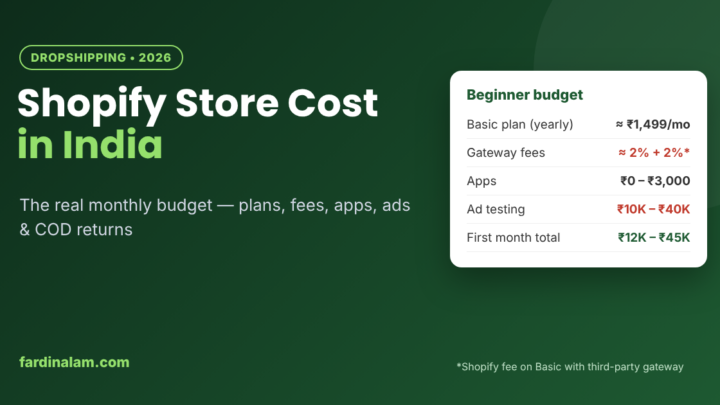
If you are still planning your budget, then read our breakdown of the real Shopify store cost in India. Besides that, our Diwali selling guide for small sellers explains how to time a launch during the festive rush.
Winning dropshipping products: frequently asked questions
Can I buy a list of winning products?
You can, but lists sold online are usually old and already saturated. Use them for inspiration only, and always run your own checks and tests.
How many products should I test?
Plan to test 5–10 products. Most won’t work, and that’s expected. One good product can be enough to build a profitable store.
What price range works best in India?
Many successful stores sell in the ₹499–₹1,999 range. It allows impulse buying while leaving enough margin for ads and returns.
Should I offer Cash on Delivery?
In India, COD often increases orders, but it also increases returns (RTO). Offer it with order confirmation, and encourage prepaid orders with a small discount.
The bottom line on winning dropshipping products
Finding a winning product isn’t luck — it’s a process: pick a niche, collect ideas where people already buy, check demand, do honest margin math, test the supplier, find your angle and test small. Repeat it patiently and you’ll find products that actually make money. Keep testing, and you will build your own shortlist of winning dropshipping products over time.
Disclaimer: This guide is for educational purposes only. Results depend on your product, market, budget and execution. Always follow platform policies and Indian laws when selling online.

1 Comment