From 15 October 2026, the new UPI rules bring a fee called MDR (merchant discount rate) to some UPI payments. Naturally, the news has worried a lot of people, because UPI has been free for years. So, will you now pay extra every time you scan a QR code? In most cases, no.
This guide explains the new UPI rules in plain English: who pays, how much, which payments stay free, and what small shop owners and online sellers should do this week.

New UPI rules at a glance
Here is a quick summary of the framework that banks have shared with their customers:
| Type of UPI payment | Amount | Fee (MDR) | Who pays |
|---|---|---|---|
| Sending money to a person (P2P) | Any amount | Free | Nobody |
| Paying a shop or business (P2M) | Up to ₹2,000 | Free | Nobody |
| Paying a shop or business (P2M) | Above ₹2,000 | 0.4%, capped at ₹300 | Merchant |
| Small merchants (UPI QR collections up to ₹1 lakh a month) | Any amount | Free | Nobody |
| Railways, fuel, telecom, insurance, agri inputs | Above ₹2,000 | Flat ₹5 per payment | Merchant |
| Mutual funds, brokers and other capital-market payments | Above ₹2,000 | 0.02%, capped at ₹300 | Merchant |
| UPI AutoPay and mandates (SIPs, OTT, bills) | Any amount | Free | Nobody |
In short, the fee only touches larger payments to businesses, and even then the business pays it, not you.
What the new UPI rules mean for regular users
For most people, very little changes. First, sending money to friends and family stays completely free, whatever the amount. Second, paying a shop up to ₹2,000 also stays free. According to NPCI figures quoted by banks, payments of ₹2,000 or less make up more than 95% of all person-to-merchant UPI payments, so almost every chai, grocery or auto payment you make falls in the free zone.
Also, the ₹2,000 figure is not a new transaction limit. You can still pay ₹10,000 or ₹50,000 by UPI exactly as before. The ₹2,000 line only decides whether the merchant pays a fee on that payment. Your daily UPI limit still depends on your bank and the type of payment.
Finally, your UPI AutoPay mandates for SIPs, OTT plans and recurring bills carry no MDR under the new UPI rules, so you don’t need to change them.
What the new UPI rules mean for shop owners and merchants
This is where the real change sits. If a customer pays your business more than ₹2,000 by UPI, your bank or payment provider can now deduct an MDR of 0.4% on that payment. However, the fee has a cap of ₹300 per payment, which kicks in at ₹75,000.
Importantly, banks calculate the fee on the full amount, not just the part above ₹2,000. For example, a ₹3,000 payment attracts ₹12, not 0.4% of ₹1,000.
Example MDR amounts at 0.4%
| Payment amount | MDR the merchant pays |
|---|---|
| ₹2,000 | ₹0 (below the threshold) |
| ₹5,000 | ₹20 |
| ₹10,000 | ₹40 |
| ₹50,000 | ₹200 |
| ₹75,000 | ₹300 |
| ₹1,00,000 | ₹300 (cap) |
Who still pays zero
Small merchants who collect up to ₹1 lakh a month through UPI QR codes keep zero MDR. In other words, a tea stall, a local kirana or a small home business will usually not notice any change at all. That said, your eligibility depends on your bank’s classification, so ask your bank or payment app how it has tagged your account.
Special rates for bills, fuel and investments
Some categories get a lighter rate under the new UPI rules. For payments above ₹2,000 to railways, fuel stations, telecom companies, insurers and agricultural input sellers, the merchant pays a flat ₹5 per payment instead of 0.4%.
Similarly, payments to mutual funds, SEBI-registered stockbrokers and other capital-market platforms carry a much smaller MDR of 0.02%, again capped at ₹300. So, a ₹50,000 lump-sum investment would cost the fund house about ₹10, and you would not see that charge.
Can a shop charge you extra for UPI now?
No. Banks have told merchants not to add the MDR to the customer’s bill as a separate “UPI charge” or surcharge. Instead, the merchant absorbs it as a normal cost of doing business, just like a card machine fee.
Therefore, if a shop asks you for an extra ₹20 because you are paying by UPI, politely refuse and pay the listed price. If the shop insists, you can raise a complaint through your UPI app’s help section or with the shop’s bank.
What small sellers should do now
If you run a shop, a home business or an online store, take these five steps this week:
- Check your category. Ask your bank or payment app whether your account counts as a small merchant with zero MDR.
- Look at your average order value. If most of your orders are under ₹2,000, the new UPI rules will barely affect you.
- Price large orders sensibly. For a ₹10,000 order, a ₹40 fee is smaller than most card or COD costs, so don’t panic and switch to cash.
- Keep your invoices clean. Don’t add a “UPI fee” line, because banks and the government plan to monitor surcharges.
- Read your settlement reports. Your bank will show MDR deductions there, so check them each month.
Common myths about the new UPI rules
Myth: “UPI is no longer free.” Actually, UPI stays free for every person-to-person transfer and for most shop payments.
Myth: “You can’t pay more than ₹2,000 by UPI.” Again, that’s wrong. The ₹2,000 figure is only an MDR threshold, not a payment limit.
Myth: “GST is added on top of the fee for customers.” Customers don’t pay the MDR at all, so there’s nothing extra on your side of the bill.
New UPI rules: frequently asked questions
Do I pay any charge when I send money to my friend by UPI?
No. Person-to-person UPI transfers stay free for any amount.
I paid ₹5,000 at a store. Will my bank cut extra money?
No. You pay ₹5,000 and nothing more. The store’s bank deducts ₹20 from the store’s settlement instead.
Do UPI payments for my SIP attract the fee?
No. UPI AutoPay mandates, including SIPs, carry no MDR under the new UPI rules.
Where can I check the official details?
Your bank’s website and the official NPCI website carry the latest circulars and FAQs. Because rules can change, always confirm there before you make business decisions.
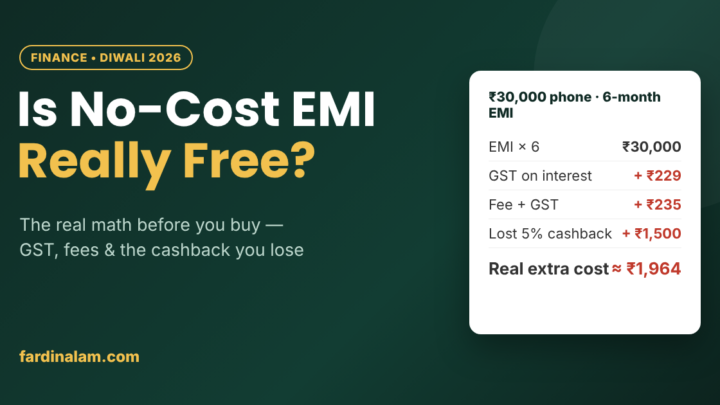
If you sell online, then you may also find our GST registration guide for online sellers useful. Besides that, our article on whether no-cost EMI is really free explains another payment cost that many buyers miss.
The bottom line on the new UPI rules
For everyday users, the new UPI rules change almost nothing: transfers to people stay free, small shop payments stay free, and nobody can legally make you pay an extra UPI charge. For merchants, larger payments now carry a small fee, but it is capped and usually lower than the cost of cards or cash handling. So keep scanning, keep your receipts, and check your bank’s settlement report once a month.