In fact, your credit score quietly decides a lot of things: whether a bank approves your loan, how much interest you pay on it, and even whether you get a credit card at all. Yet many people only check it when a loan gets rejected. In this guide, you will learn how to check your CIBIL score for free and how to improve it.
The good news: checking your score is free, it does not lower your score, and improving it follows a few clear rules. Here’s everything you need to know, step by step.
What is a CIBIL score?
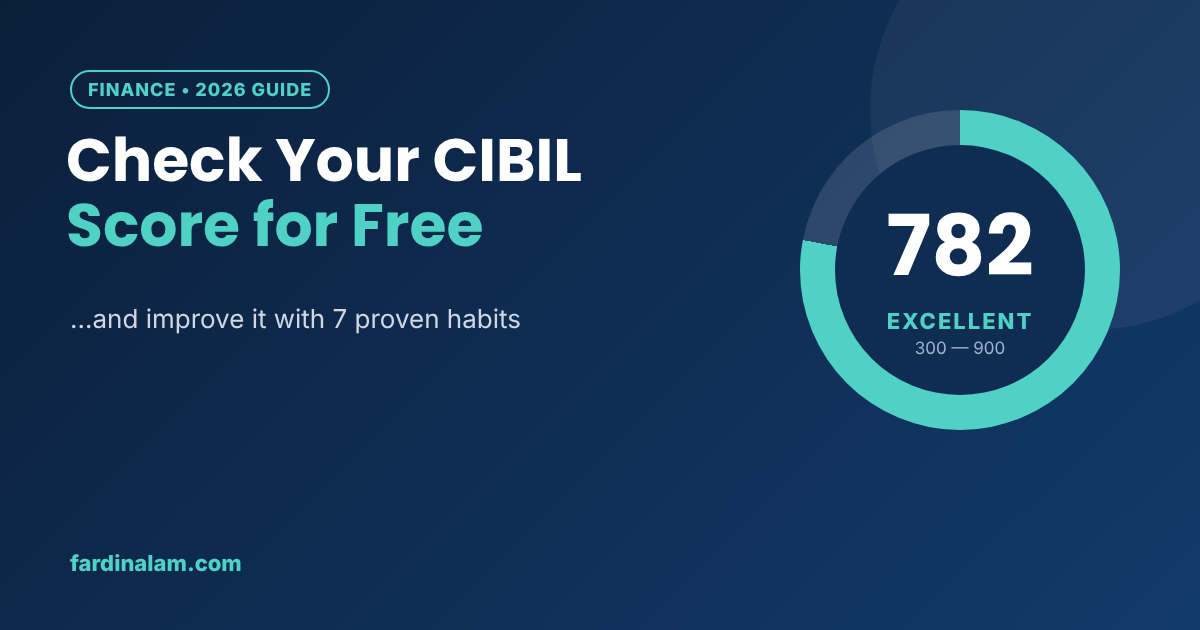
A CIBIL score is a three-digit number between 300 and 900 that shows how reliably you’ve repaid loans and credit card bills. “CIBIL” is the name most people use, but India actually has four credit bureaus, and each one calculates its own score:
- TransUnion CIBIL
- Experian
- Equifax
- CRIF High Mark
In practice, lenders can check any of them, so your scores may differ slightly from bureau to bureau. That’s normal.
What’s a good score?
| Score range | What it usually means |
|---|---|
| 750–900 | Excellent — best chance of approval and lower interest rates |
| 700–749 | Good — most loans and cards are approved |
| 650–699 | Fair — approval possible, but often at higher rates |
| Below 650 | Needs work — higher chance of rejection |
| NA / NH | No credit history yet — not a bad score, just no data |
How to check your CIBIL score for free
Under RBI rules, every credit bureau must give you one free full credit report every calendar year. Many apps and bank websites also show your score for free throughout the year.
Option 1: Directly from the bureau (recommended once a year)
- First, go to the official website of the bureau — for example, cibil.com for TransUnion CIBIL.
- Look for the free annual credit report option.
- Enter your name, PAN, date of birth, mobile number and email.
- Verify with the OTP and answer any identity questions.
- Download your full report and save the PDF.
Repeat this with Experian, Equifax and CRIF High Mark to see your full picture — it costs nothing.
Option 2: Through your bank or a finance app
Many banks, credit card apps and loan apps show a free score that refreshes monthly. This is fine for tracking, but always download the full report from the bureau at least once a year to check the details.
Important: Checking your own score is a “soft enquiry”. It never reduces your score, no matter how often you do it. Only “hard enquiries” — when a lender checks your report because you applied for credit — can have a small effect.
How to read your CIBIL score report
Don’t just look at the number. Open the report and check: Even one error here can pull down your CIBIL score.
- Personal details: name spelling, date of birth, PAN and address.
- Accounts section: every loan and card listed should be yours.
- Payment history: look for “DPD” (days past due) entries. “000” or “STD” means paid on time.
- Closed loans: a fully paid loan should show as “Closed”, not “Written off” or “Settled”.
- Enquiries: any loan or card applications you don’t recognise could signal fraud.
How to fix errors in your credit report
Of course, mistakes happen — a loan you closed still showing as active, or a loan that isn’t yours. Here’s how to correct them:
- Raise a dispute on the bureau’s website — it’s free.
- Also, attach proof if you have it, such as a loan closure letter or No Objection Certificate (NOC) from the lender.
- The bureau checks with the lender. Disputes are generally expected to be resolved within 30 days.
- If the lender is at fault and doesn’t respond, contact the bank’s grievance cell, and escalate to the RBI’s complaint portal (cms.rbi.org.in) if needed.
In addition, under RBI rules, banks and credit bureaus have to compensate customers if a complaint about credit information isn’t resolved within the set timeline — another reason to raise disputes formally rather than just calling customer care.
7 proven ways to improve your CIBIL score
1. Never miss a payment
Payment history matters most. First, set up auto-pay for EMIs and at least the total amount due on credit cards. Even one payment that’s 30+ days late can pull your score down for months.
2. Keep credit card usage below 30%
If your card limit is ₹1,00,000, try to keep your monthly spending under ₹30,000. High “credit utilisation” tells lenders you depend heavily on credit — even if you pay in full.
3. Don’t pay only the minimum amount due
Paying just the minimum avoids a late fee, but interest of around 3–4% a month keeps building on the rest. Pay the full amount whenever you can.
4. Avoid applying for many loans or cards at once
Each application is a hard enquiry. Several in a short time make you look credit-hungry. Compare offers first, then apply to one.
5. Keep your oldest card open
The age of your credit history helps your score. Closing your oldest credit card shortens it and also reduces your total limit.
6. Have a healthy mix of credit
A mix of a credit card and a loan (like a small consumer or vehicle loan) that you repay well shows you can handle different types of credit. But never take a loan just for your score. This single habit has the biggest effect on your CIBIL score.
7. Close settled accounts properly
If you ever “settled” a loan for less than the full amount, the report may show “Settled”, which hurts. If possible, pay the remaining dues, get it marked “Closed” and ask for an updated NOC.
How long does it take to improve your CIBIL score?
There’s no instant fix. With on-time payments and lower card usage, many people see improvement within 3 to 6 months, because lenders report data to bureaus every month. Recovering from serious defaults can take a year or more. Be patient — and be wary of anyone who promises to “fix your CIBIL score in 7 days” for a fee.
Starting from zero? How to build a credit history
If your report shows “NA” or “NH”, you simply don’t have a history yet. Two safe ways to start:
- A secured credit card against a fixed deposit — the FD acts as security, so approval is easy.
- A small purchase on EMI that you can comfortably afford, paid on time every month.
After 6 to 12 months of on-time payments, you’ll usually have a score.
Before you pay anyone to “fix” your report, however, remember that checking it yourself is free. For example, TransUnion CIBIL’s official website lets you see your score and raise a dispute online. Also, avoid agents who promise a quick jump in your score, because no one can legally delete correct records.
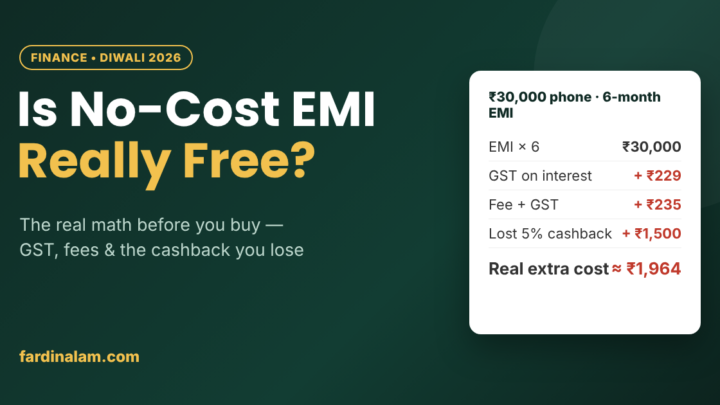
If you are planning a big purchase, then read whether no-cost EMI is really free first. Besides that, our FD vs SIP guide explains a simple way to start saving.
CIBIL score: frequently asked questions
Does checking my own CIBIL score reduce it?
No. Checking your own score is a soft enquiry and has no effect on your score.
How often should I check my credit report?
Track your score monthly through a bank or app, and download your full free report from each bureau once a year to check for errors. Small steps like these lift your CIBIL score steadily.
Why is my score different on different apps?
Each of the four bureaus calculates its own score using the data it has, and apps may show different bureaus. Small differences are normal.
Can I get a loan with a score below 650?
It’s possible with some lenders, but usually at higher interest rates. It’s often better to spend a few months improving your score first.
Does my salary affect my CIBIL score?
No. Your income isn’t part of the score. It depends on how you use and repay credit.
The bottom line on your CIBIL score
Check your score for free, read your full report once a year, fix any errors through a formal dispute, and build good habits: pay on time, keep card usage under 30% and avoid too many applications. Do these consistently and your score will take care of itself.
Disclaimer: This article is for general education only and is not financial advice. Rules and features can change — check the official websites of the credit bureaus and the RBI for the latest information.



1 Comment